Core Technology
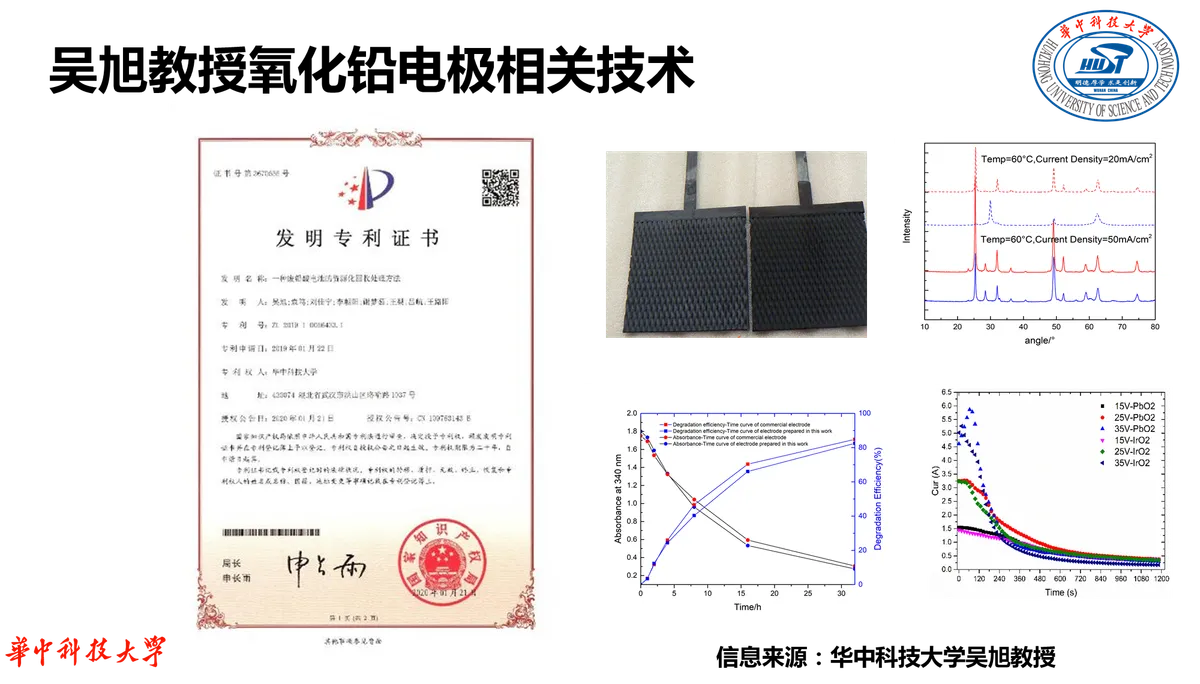
Built on HUST technology transfer, our ambient-temperature solid-phase electrolysis delivers new environmental and economic value for spent lead-acid battery recycling — clean, circular and high-value.
Technology Principles
Our solid-phase electrolysis uses a "two-step" process to convert spent lead-acid batteries directly into high-purity lead at ambient temperature and pressure — breaking away from traditional high-temperature smelting.
Ambient Solid-Phase Electrolysis
Electrolysis at ambient temperature and pressure, breaking the high-temperature smelting bottleneck with a clean, efficient process.
"Two-Step" Direct Conversion
The two-step process converts spent lead-acid batteries directly into high-purity lead in one simple, environmentally friendly extraction — ready for semiconductors, nuclear and other high-end manufacturing.
Tandem Cells · Flexible Capacity
Tandem electrolytic cells can be started or stopped flexibly to match daily capacity targets — energy-efficient and highly scalable.
Process Comparison
Compared with conventional pyrometallurgy, solid-phase electrolysis leads on purity, energy use, cycle time and environmental performance.
| Metric | Conventional Pyrometallurgy | Solid-Phase Electrolysis (Xinsheng) |
|---|---|---|
| Global process share | ~87% (traditional mainstream) | ~13% (hydrometallurgy incl. solid-phase electrolysis, emerging) |
| Purity | 85% – 99.995% | 99.998%+, up to 5N (99.999%) |
| Recovery rate | — | >99% |
| Energy use | High | 280 kWh/t, 60–70% lower than conventional |
| Process cycle | 12–24 hours | 4–6 hours |
| Environmental performance | Heavy lead dust & SO₂ pollution | Zero exhaust, closed-loop water, full resource recovery of solid waste |
Environmental Value
No Secondary Pollution
Zero exhaust gas, closed-loop water recycling and full resource recovery of solid waste throughout the process — no waste water, gas or residue discharge.
Aligned with National Circular Economy Strategy
High-value recovery of spent lead-acid batteries aligns with the circular economy, the "dual carbon" goals and China's 15th Five-Year Plan — with sustained policy tailwinds.
Pilot Facility
From pilot to industrialization, every step of the technology route is validated in real-world settings.